Natural Body Exfoliation: Why Black Seed Beats Salt and Sugar
One small black seed doing a big job: why black seed is a better natural body exfoliant than salt or sugar, when to pick a scrub over acids, and how often is enough.
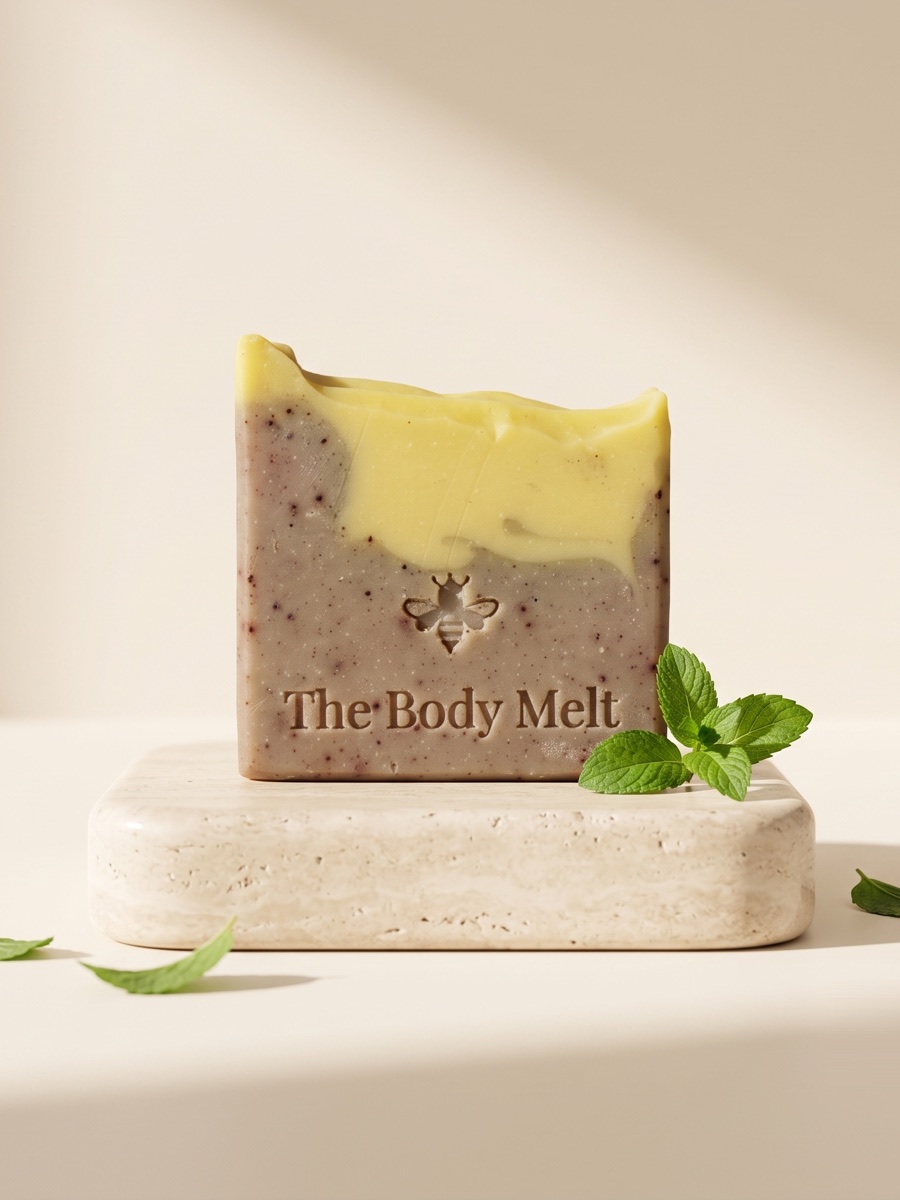
Right now, as you read this, thousands of cells on your skin are retiring. Your skin renews itself constantly: new cells from below, older ones sitting on the surface as a dull layer with a slightly rough feel. Exfoliation is simply seeing that layer out politely, so the softness underneath can show. At TheBodyMelt we picked something for the job that lives in every Egyptian kitchen: black seed.
What natural body exfoliation actually means
Dermatologists split exfoliation in two. Mechanical: something with texture that gently rubs the skin — a scrub, a cloth, a brush. Chemical: acids like AHAs and BHAs that dissolve the bonds holding dead cells in place. Black seed is proudly on the first team: a mechanical exfoliant that works by touch, not chemistry. You massage the bar over wet skin, the seeds lift the dull layer, water rinses everything away, and the softer feel is there from the first shower.
Black seed is not new to you
Nigella — the black seed — is older than soap itself here. Jars of it were found in Tutankhamun's tomb, and it still sits on top of every loaf of baladi bread. People claim a great many things about it, so let us be straight with you: we will only talk about what it does inside a bar of soap, which is scrub and smell good. The rest is not our business to promise.
Why black seed rather than salt or sugar?
The salt-versus-sugar argument is older than most soap brands, and the physics of it is simple. A salt crystal is jagged with sharp edges — excellent on rough patches, harsh for regular use. Sugar is gentler but dissolves fast: in a bar working under a hot shower it can melt before it does anything. Black seed sits in the middle: small, hard, smooth-surfaced, and it does not dissolve — so it keeps polishing from the first touch to the last rinse. And the honest bit: nobody has run clinical trials on black-seed exfoliation specifically, but the mechanics are plain — sharp edges scratch, small smooth shapes polish.
Black seed or acids?
Acids are excellent tools, and dermatologists often prefer them, especially for the face. But a scrub gives you something an acid cannot: control in the moment. You feel the pressure through your hand — lighter on forearms, firmer on heels, knees and elbows. An acid works at one strength everywhere and keeps working after the rinse. For body exfoliation in the shower, a bar with black seed in it is simpler and calmer: you are driving, second by second.
Why put the seeds inside the bar?
Mint Melt is a cold-process bar, which means the glycerine formed during saponification stays in it — unlike the big factories, which extract it and sell it separately. So the same lather that exfoliates leaves a soft, comfortable finish after the rinse: exfoliation and gentleness in one step, with a mint lift on top and a warm, peppery note from the black seed underneath. Skin on the oily side? Alternate it with Nila Melt on non-scrub days and let the clay take the deep-clean shift.
How often, and how?
Two or three times a week is plenty for most people — more than that and you are exfoliating skin that has not yet done anything worth removing. Light circular movements for about half a minute, a rinse with lukewarm rather than hot water, and moisturiser straight after: freshly exfoliated skin drinks it in differently. If your skin is dry or sensitive, start with once a week, or skip the scrub entirely and go to the quiet of Rice Melt. And if your skin is the kind that leaves dark marks after a mosquito bite or a spot, go easy on mechanical exfoliation — that is dermatologists' own advice. Anything persistent or painful? Ask your doctor first — soap is not treatment.
Questions people ask
Can I use Mint Melt on my face?
Facial skin is thinner than body skin. If you want to try, keep the pressure very light and once a week at most. Our honest opinion? Keep it for the body, and give your face something soft like Olive Melt — the gentlest bar we make.
Does black seed block pores?
No. The seed is a solid that works on the surface and rinses away with the water leaving nothing behind — it is not an oil or a wax that sits on skin. If anything, skin tends to feel cleaner once the dull top layer is gone.
One shower, one bar, and a completely different feel: Mint Melt is waiting — and there is more craft talk in our journal.