Why Is Castor Oil in Soap? What It Does for Your Skin and Lather
Castor oil is barely 5% of our recipe, yet it's the reason the lather feels thick, creamy, and stays put. Here's the science — and the honest truth about the hype.
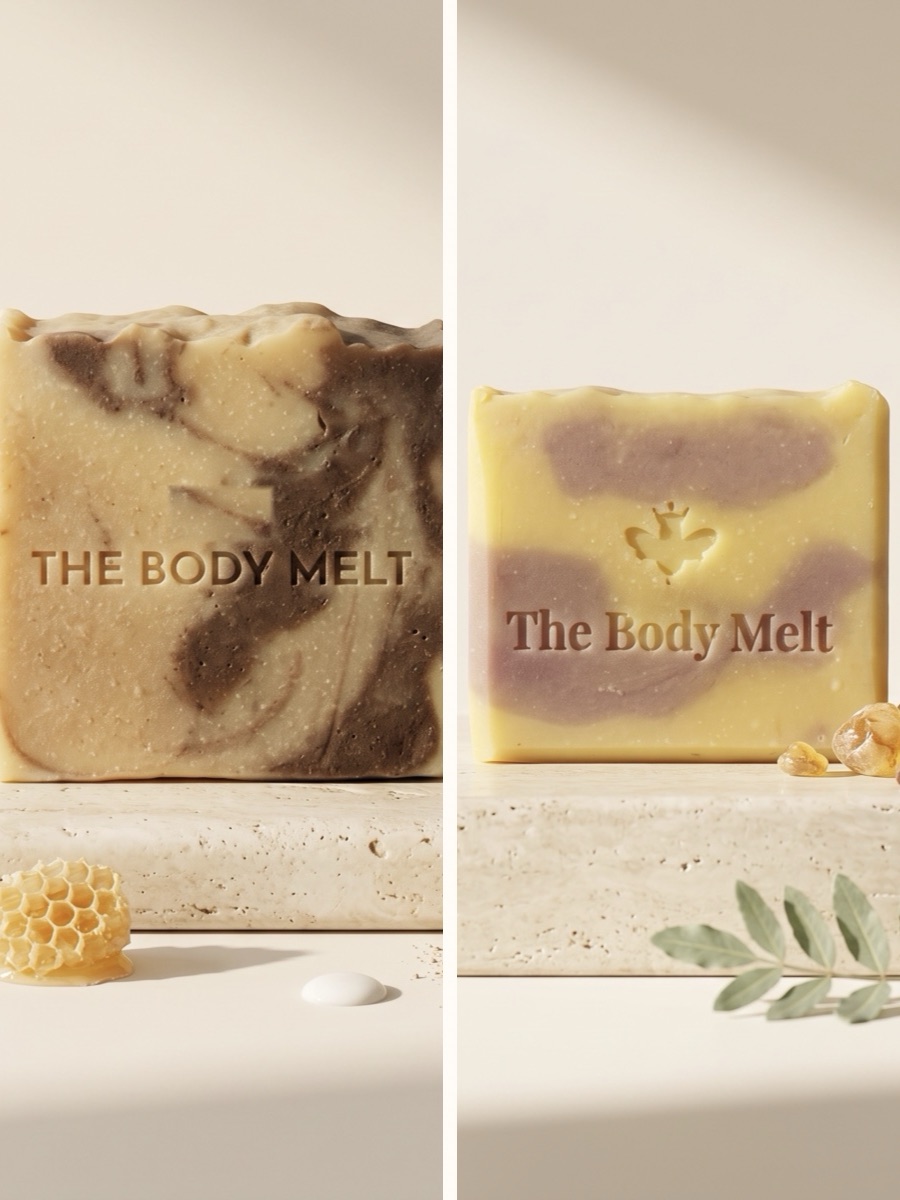
Flip over any bar of ours and read the ingredients, and somewhere between the olive oil and the coconut oil you'll spot a name you probably associate with your grandmother's remedies: castor oil. A spoonful for the tummy, a dab for the lashes — that's the folklore. In cold-process soap, though, castor oil has a completely different job, and it might be the hardest-working few percent in the whole recipe. Here's why we never pour a batch without it.
What makes castor oil unlike any other oil
The secret is a fatty acid called ricinoleic acid. Castor oil is roughly 90% ricinoleic acid — no other oil we use in soapmaking comes close, and most contain none at all. What makes this fatty acid special is a little hydroxyl group tucked into its structure: a water-loving handle that grabs onto moisture and holds it. That's why soapmakers' handbooks file castor oil under humectants — ingredients that attract water rather than repel it. In a wash-off product, that translates into lather that keeps water sitting against your skin instead of streaming straight off it.
A thick, stable lather from a tiny percentage
This is castor oil's real party trick. We only need about 3–8% of the total oils. That small share does two things: it stabilizes the bubbles the other oils create, and it turns them dense and creamy instead of big, airy, and quick to collapse. Try it side by side — a bar with castor and a bar without. The first one gives you lather that stands up on your palm, feels almost like a lotion, and lasts to the end of the shower.
So why not add more? Because craft is about restraint. Push castor past 10% and the bar turns soft, sticky, and quick to melt away in the dish. We hold the middle: enough for that signature foam, never enough to spoil the bar.
Castor oil benefits for skin: the real and the hyped
Let's be honest, as always. What the evidence actually supports: castor oil softens the skin's surface, helps it hold on to moisture, and the Cosmetic Ingredient Review panel assessed it as safe in cosmetic use, with irritation reported only infrequently. That's a genuinely good resume for something that touches your skin every day.
The claims about erasing wrinkles, fading spots, or growing lashes? There, the hype has run well ahead of the research. We put castor in our bars for what it demonstrably does — a better lather and a softer after-feel — not for miracle promises. And if a skin concern is persistent or worrying, a dermatologist is the right address, not a soap bar.
What it does inside our bars
In cold-process soap, oil doesn't stay oil — it saponifies, and castor oil becomes sodium ricinoleate. Its water-loving hydroxyl group survives the transformation and keeps working alongside the natural glycerine that forms in every batch we make (and that we never strip out, unlike industrial soap factories). The result is that clean-but-not-tight feeling after rinsing.
That's why you'll find castor in nearly every bar we pour: in Rice Melt it makes the milky lather even gentler for dry, sensitive skin; in Cucumber Melt it holds a light, brisk foam gentle enough for sensitive skin; and in Olive Melt — our mildest bar — it rounds out the olive oil's softness.
Questions people ask
Isn't castor oil heavy? Won't it clog my pores?
Raw oil on your face is one thing; soap is another thing entirely. Inside a bar, castor has been transformed by saponification into an ingredient that rinses away with water — what reaches you is the lather and the after-feel, not a film of oil. People with oily skin often reach for a bar like Nila Melt, where clay does the deep cleaning and castor keeps the foam creamy.
Can I really feel the difference, or is this marketing?
Test it yourself: work up a lather and let it sit on your hand for a minute. If the foam stays put — dense, creamy, not dissolving into water — that's castor at work. It's one of those small details of the craft we love unpacking in our journal.
Want to feel it from the very first wash? Start with Frankincense Melt — our everyday bar, whose lather does all the talking.