Cocoa Butter for Skin: What It Really Does (and What It Doesn't)
The fat that makes chocolate snap is the same one keeping your skin from feeling tight after a wash. Here's what cocoa butter really does in a soap bar — and the one famous claim it can't back up.
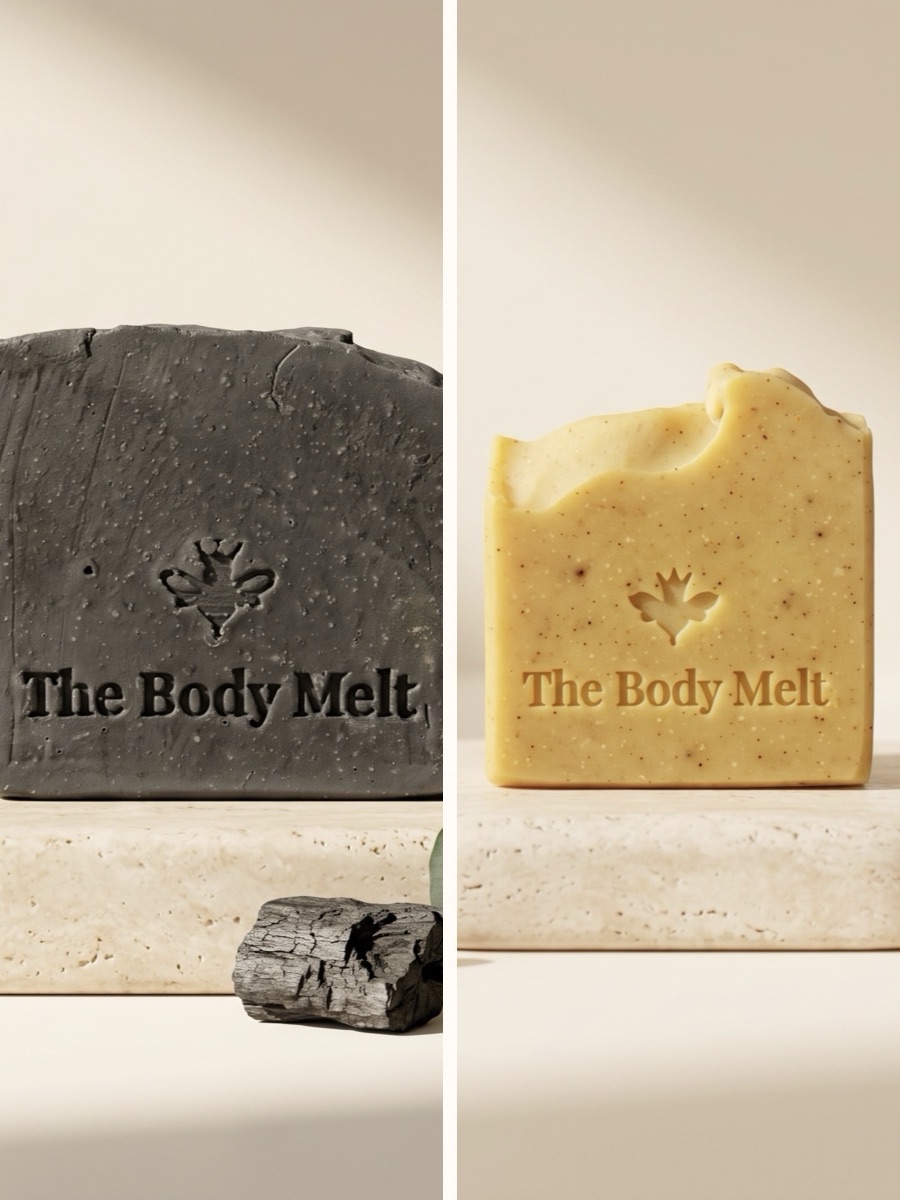
Snap a piece of good dark chocolate and listen — that clean crack is cocoa butter doing its thing. The same golden fat pressed from cocoa beans is one of the quiet heroes inside a handmade soap bar. It doesn't foam, it doesn't shout, and it almost never gets the credit. So today the whole article is for it: what cocoa butter really does for your skin, what it does for the bar itself, and one famous claim we're going to be honest with you about.
A thin film instead of that tight feeling
You know that squeaky, stretched-drum feeling some soaps leave on your face? That's usually moisture escaping fast from freshly washed skin. Cocoa butter works against exactly that. It's what skincare people call an occlusive emollient: it lays down a very thin film that slows water from evaporating out of your skin — the fancy term is transepidermal water loss. Less water escaping means skin that feels comfortable and supple after rinsing, not tight.
The chemistry is sweet and simple. Cocoa butter is mostly three fatty acids — stearic, oleic, and palmitic — packed tightly together. The blend melts just under body temperature, so it glides and spreads the moment it touches warm skin. And in cold-process soap it never works alone: the glycerine that forms naturally during saponification stays right in the bar — big industrial makers usually extract it and sell it separately, we leave it where it belongs — so the glycerine draws moisture in while the cocoa butter film keeps it there. If your skin runs dry, that team-up is the whole point of a bar like Rice Melt.
The secret behind a hard bar
Cocoa butter is solid at room temperature and melts around 34°C — a touch below body heat. That's why chocolate melts in your mouth, and it's also why a bar made with cocoa butter keeps its shape through a steamy bathroom. All that stearic and palmitic acid gives the soap body and backbone: a harder bar dissolves slower, lasts weeks longer, and doesn't melt into sad jelly in the soap dish.
There's craft in the dose, though. Push cocoa butter too high and the bar turns brittle and starts to crack like a biscuit. We keep it at a modest, tested slice of the recipe — enough for hardness and that skin-comforting film, never enough to make the bar temperamental. More kitchen confessions like this one live in our journal.
A scent that whispers
Unrefined cocoa butter carries a faint, warm chocolate note. After saponification it softens even further, into something you only notice if you go looking — a whisper in the background, never a dessert counter. That's actually a gift: it means cocoa butter sits politely under the essential oils instead of fighting them. In a daily bar like Frankincense Melt, the resin does the talking and the cocoa butter hums underneath.
The honest part: stretch marks
Cocoa butter's most famous claim is that it prevents stretch marks. The truth? A double-blind, placebo-controlled trial on pregnant women found no real difference between cocoa butter lotion and a plain placebo. The talk is simply bigger than the evidence, so we won't sell you that story. What cocoa butter honestly delivers — softness, a smoother feel, moisture that stays put — is a perfectly good reason to love it without the fairy tale.
Questions people ask
Is cocoa butter soap okay for oily skin?
Raw cocoa butter straight on the face is famously heavy — it sits high on comedogenic charts, and dermatologists usually steer oily faces away from it as a leave-on. Soap is a different story: most of the butter is transformed into actual soap during saponification, and the rest rinses off in seconds. Still, if your skin runs oily, you'll probably be happier with something deeper-cleaning like Charcoal Melt or the clay-rich Nila Melt.
Can it help eczema or very irritated skin?
Cocoa butter softens and comforts the feel of dry skin, and our gentlest bar, Olive Melt, was made with easily-upset skin in mind. But for any persistent skin condition, your dermatologist comes first — soap is care, not medicine.
If washing your face usually ends in tightness, start soft: Rice Melt is waiting.