Rice Water for Skin: What Does the Evidence Actually Say?
Rice water is K-beauty's favorite comeback — but the hype runs ahead of the science. Here's what's actually proven, and how we use rice in our own soap.
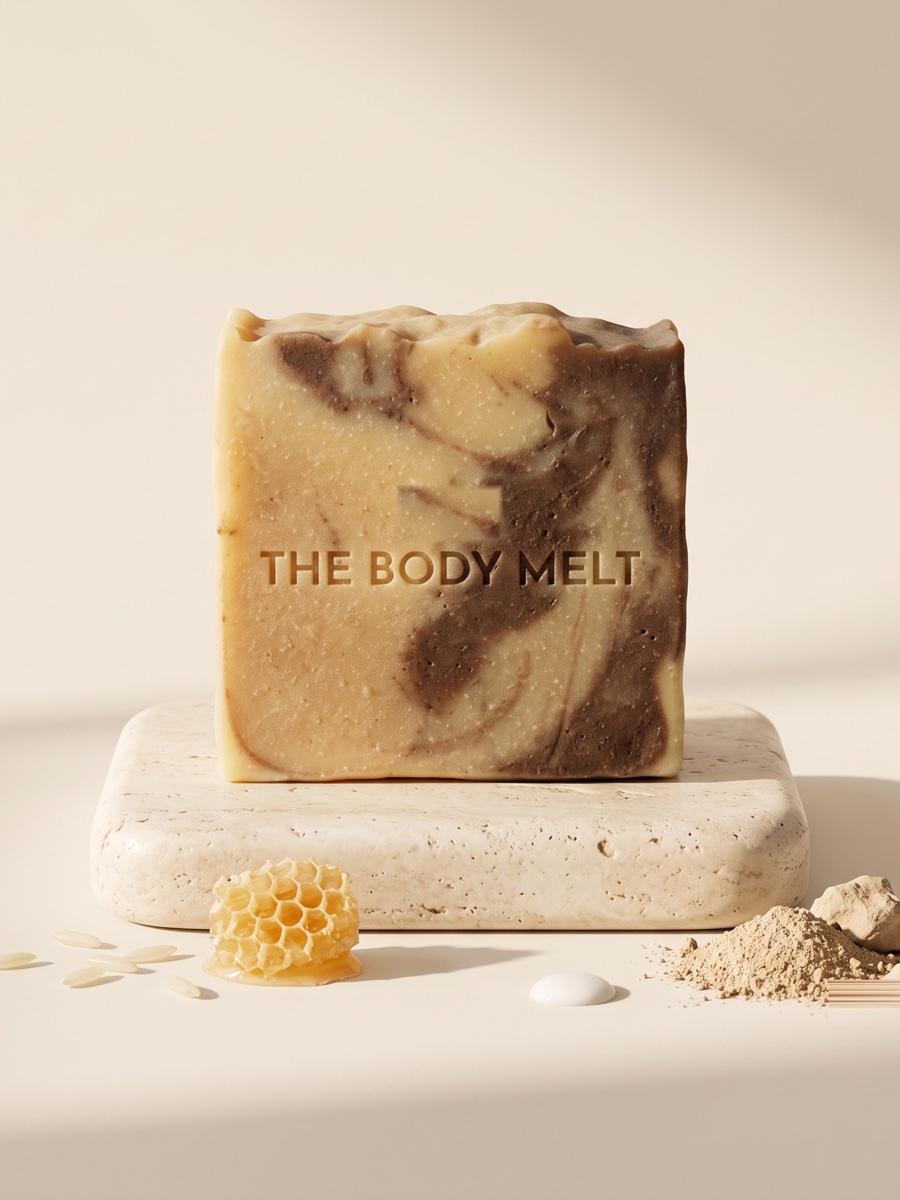
Open any beauty feed right now and you'll find someone pouring cloudy water over their face and promising you glass skin by Friday. Rice water is the K-beauty ingredient of the moment — again — and since we put actual rice in one of our soaps, here's the honest version, the way we do everything on our journal: what's old wisdom, what's real evidence, and what's just the algorithm talking.
Where the trend actually comes from
Long before TikTok, rice-washing water had a beauty CV. Court women in Heian-era Japan (794–1185) rinsed their famous floor-length hair with *yu-su-ru* — the milky water left over from washing rice. The Yao women of Huangluo village in southern China still ferment rice water for their hair today, and Korean households passed the habit down for generations before K-beauty brands bottled it. That history is real. What's less real is the suspiciously tidy marketing version, complete with exact dynasties and recipes — much of it written backwards to sell the bottle. The tradition existed; the footnotes came later.
What the evidence actually says
The best human study we found is from 2002, in a respected dermatology journal: researchers irritated volunteers' skin with a harsh detergent, then had them soak in rice-starch bath water, twice a day for fifteen minutes. The rice-starch baths helped the stressed skin barrier recover about 20% better than plain water. Small study, real result.
Beyond that, rice water contains genuinely nice things: starch, amino acids, a little vitamin B, inositol (which smooths surface friction on hair), and antioxidants like ferulic acid. Dermatologists who like it describe it the way we'd describe a good soap: gentle, supportive, comfortable — for skin that runs dry, sensitive, or dull. Nobody serious calls it a miracle.
And what the evidence doesn't say
The famous claims are running ahead of the science. No clinical trial has shown rice water grows hair. The "brightening" studies mostly happened in lab dishes with concentrated rice extracts — not on human faces with kitchen rice water. So when a video promises glass skin in a week, that's hype outrunning evidence — the talk is louder than the proof. The glow people notice is usually simpler: clean, well-moisturized skin catches the light better. That's not magic; that's routine.
How rice actually gets into our soap
This part we can speak on with full confidence — we do it with our own hands. Our Rice Melt bar has rice in the batch itself — the starchy goodness goes into the pot, not sprinkled on top as an afterthought. Cold-process soap has a quiet advantage here: the glycerine that forms during saponification stays in the bar (industrial makers pull it out and sell it separately), so the rice and milk sit in a naturally moisturizing base. The result is exactly what rice deserves: a creamy, gentle wash and a soft, calm after-feel. We're not promising you a Heian court complexion. We're promising a genuinely lovely five minutes in the shower.
Want to try DIY rice water?
Go for it — it's basically free. Rinse the rice, soak it for half an hour, strain, and use the water as a final rinse. Two honest tips: keep it in the fridge and use it within a couple of days (it spoils fast), and patch-test first like anything new. And if you'd rather have rice in a form that doesn't grow science experiments in your fridge — we know a bar.
Questions people ask
Does rice water brighten skin?
The brightening research is mostly lab-level, on concentrated extracts — there's no solid human trial showing kitchen rice water lightens anything, and we won't promise what the evidence doesn't back. What rice water demonstrably is: mild and comfortable. If glow is your goal, a gentle consistent routine with something like our Carrot Melt or Turmeric Melt bar is a more honest path than waiting on cloudy water.
Is rice water good for sensitive or eczema-prone skin?
That 2002 study did find rice-starch baths helped a stressed skin barrier feel and behave better, and dermatologists often name rice water as one of the gentler trend ingredients. But for any persistent skin condition, your doctor comes first — always. For everyday washing on reactive skin, our Olive Melt is the gentlest bar we make.
Trends move on — but rice has been quietly lovely for a thousand years, and it's waiting for you in Rice Melt.