Shea Butter Benefits for Skin: Why It's in Every Bar We Make
Shea butter is the one ingredient you'll find in every single TheBodyMelt bar. Here's what the evidence actually says it does for your skin — and why our lather feels the way it does.
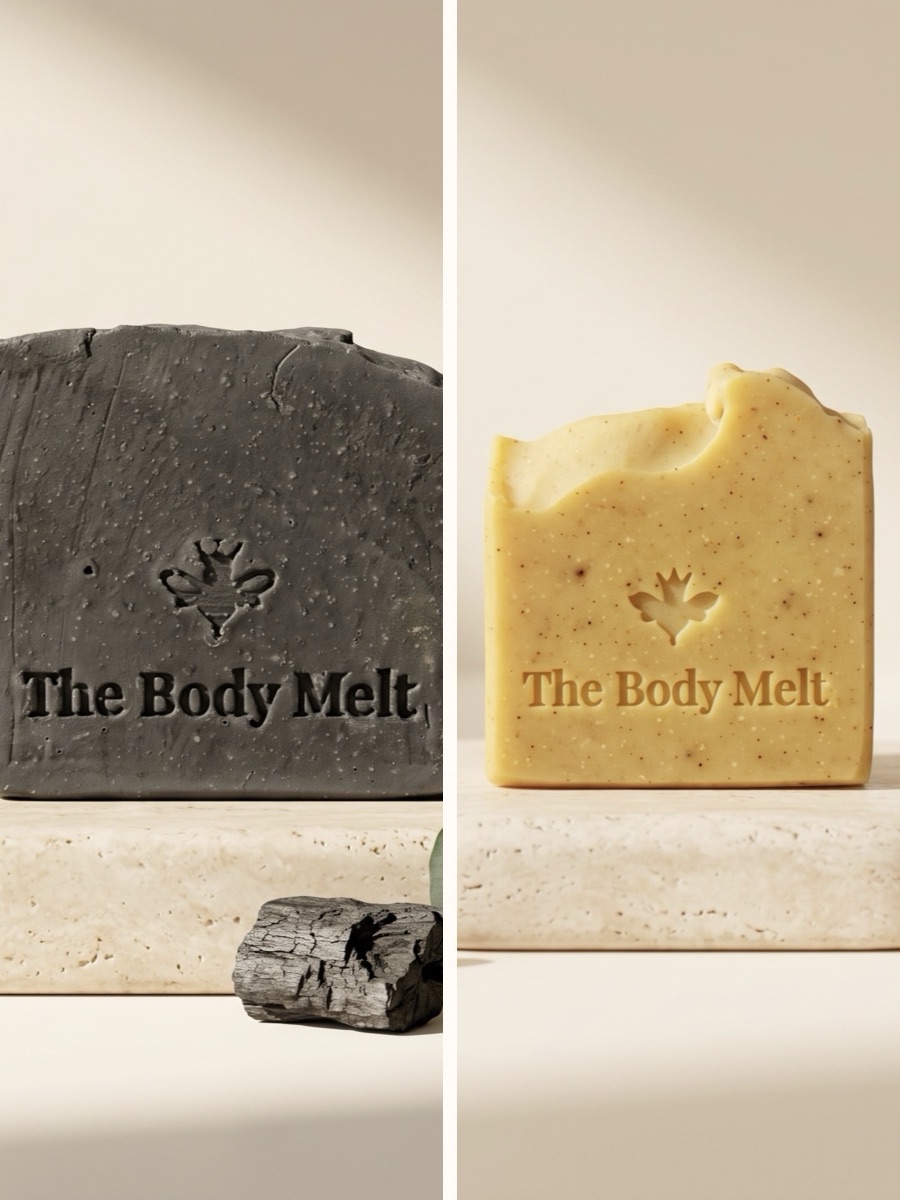
Some ingredients visit a recipe. Shea butter lives in ours. Every bar that leaves our Cairo studio carries it — from Olive Melt, the gentlest soap we make, to Mint Melt with its scrubby black seed. That's not a marketing flourish; it's a formulation decision we made on day one and never looked back from. Here's the why — backed by evidence, not just soap-maker romance.
What shea butter actually is
Shea butter is the fat pressed from the nuts of the shea tree, which grows in a wide belt across West and East Africa. Women's cooperatives there have been harvesting and hand-processing it for centuries, so this is a skincare tradition far older than the skincare industry itself.
Chemically, it's mostly two fatty acids: oleic (roughly 40–50%) and stearic (roughly 30–40%). Then comes the interesting part — an unusually large unsaponifiable fraction, up to about 10%, packed with triterpenes like lupeol and the amyrins, tocopherols (vitamin E), and plant sterols. Hold that thought; it's the secret to why shea behaves so beautifully in soap.
An emollient your skin recognizes
An emollient softens and smooths by settling into the tiny gaps between skin cells and slowing down water loss. Shea butter is a textbook emollient — and a well-studied one. Research measuring transepidermal water loss found that shea butter improves skin hydration and supports the skin barrier, and dermatology sources like the Cleveland Clinic count it among the reliable moisturizing ingredients for dry, rough, tight-feeling skin.
Part of the charm is familiarity: oleic and stearic acids belong to the same lipid families your own sebum is made of. Skin tends to drink shea in without that greasy, sitting-on-top feeling some heavier butters leave behind.
Why the lather feels soft
Here's the soap-maker's angle. In cold-process soap, stearic acid turns into a hard, long-lasting bar with a dense, creamy lather, while oleic acid brings a stable, conditioning lather that cleans without stripping. Shea gives us both in one ingredient.
And that big unsaponifiable fraction? It never turns into soap at all. It stays behind in the finished bar as a free emollient — so while the soap part cleans, the shea part quietly conditions at the same time. Add the glycerine that forms naturally during saponification (industrial makers extract it to sell separately; we leave every drop where it belongs), and you get a wash that feels closer to a lotion than a detergent.
Honest talk: what's proven, what's folklore
Moisturizing and emollient effects? Well supported. But some claims floating around — precise "comedogenic ratings," dramatic anti-aging promises — have more repetition behind them than research. The popular comedogenic scales you see online don't come from controlled studies, so we won't quote them as fact.
One more honesty point: real soap, ours and everyone else's, is naturally alkaline. No true soap is "pH-balanced," and we'd rather tell you that than pretend. What shea butter and retained glycerine actually do is make that wash feel dramatically softer and gentler.
Questions people ask
I have a nut allergy — is shea butter soap a problem for me?
Shea nuts are technically tree nuts, but shea butter contains very little of the proteins that trigger nut allergies, and researchers haven't documented clear cases of skin reactions in nut-allergic people using it on skin. That said, if your allergy is severe, check with your doctor first and patch-test on a small area — a doctor is always the right call for anything persistent.
Is shea butter only for dry skin?
Not at all. In a rinse-off bar it simply makes the wash gentler for every skin type. People with dry or sensitive skin tend to love Rice Melt; oily skin usually reaches for Charcoal Melt — and in both, shea is working quietly in the background.
Curious how the rest of our recipes work? Wander through the journal — or just start with Frankincense Melt, our everyday bar with everything above baked in.